With the Presidential election just a couple months away, lets take a quick look at what each candidates housing policies are.
Barack Obama (D) - With President Obama, we actually have a track record to look at. Unfortunately for the President, his housing policies have done very little to fix the problems facing the market. Through a variety of different programs (HARP, HARP II, etc..) Obama has primarily focused on helping underwater homeowners refinance in an attempt to keep them in their homes. These various programs have had some success, but most analysts agree that they haven't done nearly enough.
Interestingly, President Obama's re-election website does not list any housing policies. He has posted his policy positions on a variety of other issues, but housing is notably absent. Unfortunately for the market, the President doesn't seem to have much of a vision, and if he does he isn't exactly waving it around for the public to see.
Mitt Romney (R) - Mitt Romney has not been President, so we don't have a track record to analyze. However, his website does lay out his policy vision on housing. You can find that information here. The core of Romney's housing plan is to reform Fannie Mae and Freddie Mac, the two government-sponsored enterprises. The website doesn't provide any specifics as to what constitutes "reform", so it is unclear what exactly he means. He also mentions that he plans to roll back most or all of the new rules and reforms instituted under President Obama. Mitt Romney certainly deserves credit for outlining and providing a housing policy, but the lack of specifics is certainly frustrating.
Conclusion: So what does this all mean? From a "big picture" perspective, neither candidate seems willing to address the substantive issues in the housing market. Although the market has recovered significantly in recent years, there are certainly underlying issues that need to be tackled. Personally, I'd like to see something from the following list implemented:
-One year moratorium on all foreclosures sales.
-Streamlining of the short sale process with basic rules set by the federal government.
-Slight loosening of underwriting standards on Freddie and Fannie loans.
-Streamlined re-financing of any underwater homeowner who is current on payments.
I could continue this list, but these are four ideas that would drastically help the market, and neither candidate is willing to go there.
At the end of the day, the pundits say this election will be about the economy but the candidates refuse to discuss one of the central tenants of the economy. It's frustrating as a real estate agent, and it has to be even more frustrating for those that bore the brunt of the housing market.
Showing posts with label housing bubble. Show all posts
Showing posts with label housing bubble. Show all posts
Thursday, September 6, 2012


Tuesday, September 13, 2011
New Housing Data Released
On the positive side, market inventory fell significantly compared to a year ago. As always, it is important to keep "one year ago" in perspective - just over a year ago, the federal first-time homebuyer tax credit ended. Most credible analysts believe that, while the tax credit may have played a role in dramatically stabilizing a real estate market in free-fall, it is also believed to have distorted the market - perhaps by as much as 10%. Lower market inventory is helping return the market to what analysts consider "balanced" - that is, somewhere between five and six months worth of inventory on the market. That number currently stands at 7 months.
Purchase activity also showed marked improvement from a year ago. Activity has increased roughly 46% compared to one year ago, even amidst tightened credit and market uncertainty. Again (and I hate to sound like a broken record, but this is a very important detail), we are comparing to a period of depressed activity after the end of the federal tax credit. But 46% is still a significant number, and I think it shows that market activity has remained strong, even despite the lack of federal housing incentives.
But what really matters to buyers and sellers are prices. Are they up? Are they down? Are they flat? Well, in the very short-term (i.e. in the last six months), we are seeing a small but clear trend towards fewer seller concessions. But if you take a longer perspective, prices have fallen. Compared to a year ago, the median sales price is down 10.9% (remember that distortion from the tax credit that we talked about?). And somewhere between 1/3 and 1/2 of all homes with mortgages are underwater (depending on whose numbers you believe).
It is abundantly clear that, although other pieces of data show encouraging signs, the only one that matters to people (price) is still struggling. My opinion is that as the the market continues to balance itself with less inventory and higher purchase activity, we will see some small gains. Let's imagine it's September 13, 2012 - my prediction is that the data will say that housing prices were up compared to "a year ago." Check back with me in a year to see if I was right!
At the end of the day, it will be very interesting to see where the market goes over the next 6 months. There have been (seemingly serious?) talks by the Obama Administration about how to "fix" the housing market. Some have speculated that Fannie Mae and Freddie Mac might allow borrowers, whether current or delinquent, underwater or with equity, to refinance at current interest rates (roughly 4%). I'm sure I could fill up an entire post about these plans, so let's save that conversation for a later date.
Monday, August 22, 2011
Pending Sales Up, Inventory Down, Better Days Ahead?

The data shows that, across all price ranges, there has been an 18% drop in inventory compared to one year ago. Homes priced between $120,000 and $200,000 saw the largest decrease in inventory, down roughly 25% from last year. This is particularly important to sellers with equity in their homes, as well as home buyers making their first home purchase. Lower inventory puts more pressure on buyers to act quickly and with stronger offers, which over time should lead to some price gains.
The other encouraging bit of information came in the way of pending sales. According to MAAR, pending sales are up roughly 43% compared to a year ago. Higher pending sales has a similar effect to lower inventory - greater demand for the same (or fewer) number of houses leads to fewer days on market, stronger offers, and (over time) price gains.
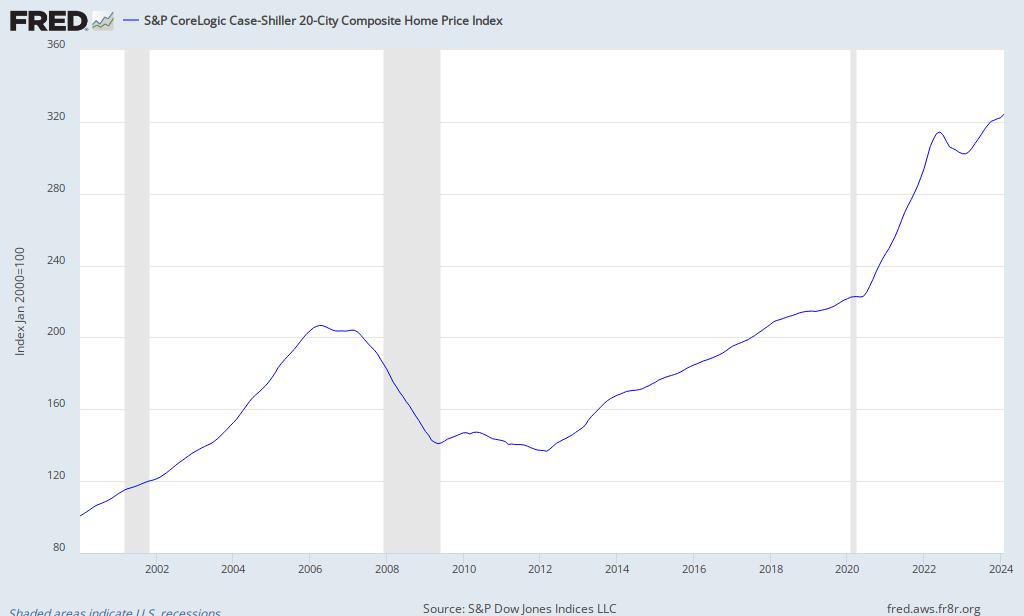
In the grand scheme of things, we are still far from seeing the recovery that is needed. Housing prices are still soft, and more than 30% of all new inventory is either a lender-owned or lender-mediated sale. Overall, housing prices are still down roughly 33% compared to their highs in 2005 and 2006. We still have a ways to go, but it's definitely encouraging to see some positive movement as we swing slowly towards a more balanced market.
To Help or Not to Help?
Via the opinion section of the New York Times:
But I think this situation gets to the heart of the larger debate we are having in this country about the role the government should play during economic recessions. A stronger effort to reduce mortgage principle balances would undoubtedly give the economy a jolt, but some view any intervention by the government as a distortion in the market and an unscrupulous use of taxpayer dollars. Others argue that the "free market" got us into this situation, and that we are letting our fellow citizens and the larger economy down by refusing to address the root of our economic woes.
Tens of millions of Americans are being crushed by the overhang of mortgage debt. And Congress and the White House have yet to figure out that the economy will not recover until housing recovers — and that won’t happen without a robust effort to curb foreclosures by modifying troubled mortgage loans.There is little doubt that the housing bubble, followed by the housing bust, has left millions of Americans with huge debt on an asset that will never be worth what they paid for it. As homeowners scrimp every last dollar to pay their mortgage, less money is spent in other areas that boost the economy, such as personal investing or consumer spending.
But I think this situation gets to the heart of the larger debate we are having in this country about the role the government should play during economic recessions. A stronger effort to reduce mortgage principle balances would undoubtedly give the economy a jolt, but some view any intervention by the government as a distortion in the market and an unscrupulous use of taxpayer dollars. Others argue that the "free market" got us into this situation, and that we are letting our fellow citizens and the larger economy down by refusing to address the root of our economic woes.
Subscribe to:
Posts (Atom)