Our guest blogger is Kay Halvorson, a Certified Mortgage Planning Specialist with Mortgages Unlimited. Her contact information can be found at the bottom of this post.
With so many first-time homebuyers looking for their first home, I want to tell you about a superb new program for them. Recently I had a client, Susan, who had met with several loan officers before being referred to me. No one had mentioned this program to her.
After we discussed her situation and financial goals, I told her about this new program for qualified first-time homebuyers. We qualified Susan for a conventional mortgage with only 3% down! In addition, she qualified for down payment assistance. The down payment assistance is not a grant. It is a second mortgage that the homebuyer pays back (either when they sell their home or move, or they pay back the loan in small monthly payments over a ten year period). The down payment assistance helped her with the down payment and closing costs so she also had more resources for some remodeling she wanted to do on her new home.
BEST OF ALL, this is a Mortgage Credit Certificate program where she will get a tax credit of up to $2,000 back on her federal taxes EVERY YEAR until she moves, sells or refinances! This credit reduces her tax liability, dollar for dollar, on her federal taxes by up to $2,000 each year. This program benefits those borrowers who have a federal tax liability and either reduces their tax bill by up to $2,000 per year or increases their refund from the IRS of up to $2,000 per year as long as they live in the home as their primary residence.
Susan said, “I am so thrilled to be a first-time homeowner! Being able to own my very own property to call home is a feeling like no other.”
To find out more about this Mortgage Credit Certificate program and see if you qualify, please call or email me.
Kay Halvorson
Mortgages Unlimited, Inc. (NMLS# 251210)
Cell:612-720-1200
Email: khalvorson@muihomeloans.com
Showing posts with label home buyer tax credit. Show all posts
Monday, November 25, 2013
Tuesday, September 13, 2011
New Housing Data Released
The Minneapolis Area Association of REALTORS released new housing data today, and while there are some areas of optimism, questions still remain as to how long it will take for the market to show signs of a true recovery.
On the positive side, market inventory fell significantly compared to a year ago. As always, it is important to keep "one year ago" in perspective - just over a year ago, the federal first-time homebuyer tax credit ended. Most credible analysts believe that, while the tax credit may have played a role in dramatically stabilizing a real estate market in free-fall, it is also believed to have distorted the market - perhaps by as much as 10%. Lower market inventory is helping return the market to what analysts consider "balanced" - that is, somewhere between five and six months worth of inventory on the market. That number currently stands at 7 months.
Purchase activity also showed marked improvement from a year ago. Activity has increased roughly 46% compared to one year ago, even amidst tightened credit and market uncertainty. Again (and I hate to sound like a broken record, but this is a very important detail), we are comparing to a period of depressed activity after the end of the federal tax credit. But 46% is still a significant number, and I think it shows that market activity has remained strong, even despite the lack of federal housing incentives.
But what really matters to buyers and sellers are prices. Are they up? Are they down? Are they flat? Well, in the very short-term (i.e. in the last six months), we are seeing a small but clear trend towards fewer seller concessions. But if you take a longer perspective, prices have fallen. Compared to a year ago, the median sales price is down 10.9% (remember that distortion from the tax credit that we talked about?). And somewhere between 1/3 and 1/2 of all homes with mortgages are underwater (depending on whose numbers you believe).
It is abundantly clear that, although other pieces of data show encouraging signs, the only one that matters to people (price) is still struggling. My opinion is that as the the market continues to balance itself with less inventory and higher purchase activity, we will see some small gains. Let's imagine it's September 13, 2012 - my prediction is that the data will say that housing prices were up compared to "a year ago." Check back with me in a year to see if I was right!
At the end of the day, it will be very interesting to see where the market goes over the next 6 months. There have been (seemingly serious?) talks by the Obama Administration about how to "fix" the housing market. Some have speculated that Fannie Mae and Freddie Mac might allow borrowers, whether current or delinquent, underwater or with equity, to refinance at current interest rates (roughly 4%). I'm sure I could fill up an entire post about these plans, so let's save that conversation for a later date.
On the positive side, market inventory fell significantly compared to a year ago. As always, it is important to keep "one year ago" in perspective - just over a year ago, the federal first-time homebuyer tax credit ended. Most credible analysts believe that, while the tax credit may have played a role in dramatically stabilizing a real estate market in free-fall, it is also believed to have distorted the market - perhaps by as much as 10%. Lower market inventory is helping return the market to what analysts consider "balanced" - that is, somewhere between five and six months worth of inventory on the market. That number currently stands at 7 months.
Purchase activity also showed marked improvement from a year ago. Activity has increased roughly 46% compared to one year ago, even amidst tightened credit and market uncertainty. Again (and I hate to sound like a broken record, but this is a very important detail), we are comparing to a period of depressed activity after the end of the federal tax credit. But 46% is still a significant number, and I think it shows that market activity has remained strong, even despite the lack of federal housing incentives.
But what really matters to buyers and sellers are prices. Are they up? Are they down? Are they flat? Well, in the very short-term (i.e. in the last six months), we are seeing a small but clear trend towards fewer seller concessions. But if you take a longer perspective, prices have fallen. Compared to a year ago, the median sales price is down 10.9% (remember that distortion from the tax credit that we talked about?). And somewhere between 1/3 and 1/2 of all homes with mortgages are underwater (depending on whose numbers you believe).
It is abundantly clear that, although other pieces of data show encouraging signs, the only one that matters to people (price) is still struggling. My opinion is that as the the market continues to balance itself with less inventory and higher purchase activity, we will see some small gains. Let's imagine it's September 13, 2012 - my prediction is that the data will say that housing prices were up compared to "a year ago." Check back with me in a year to see if I was right!
At the end of the day, it will be very interesting to see where the market goes over the next 6 months. There have been (seemingly serious?) talks by the Obama Administration about how to "fix" the housing market. Some have speculated that Fannie Mae and Freddie Mac might allow borrowers, whether current or delinquent, underwater or with equity, to refinance at current interest rates (roughly 4%). I'm sure I could fill up an entire post about these plans, so let's save that conversation for a later date.
Wednesday, June 1, 2011
Jobs and the Housing Market
Another monthly jobs report was released today by ADP and the news is less impressive than most economists and analysts were predicting/hoping for. The report essentially says that the economy added only 38,000 jobs last month, including small losses in manufacturing. While it is encouraging that the economy continues to add jobs, most economists agree that at least 150,000 jobs must be created monthly...just to keep pace with population growth!
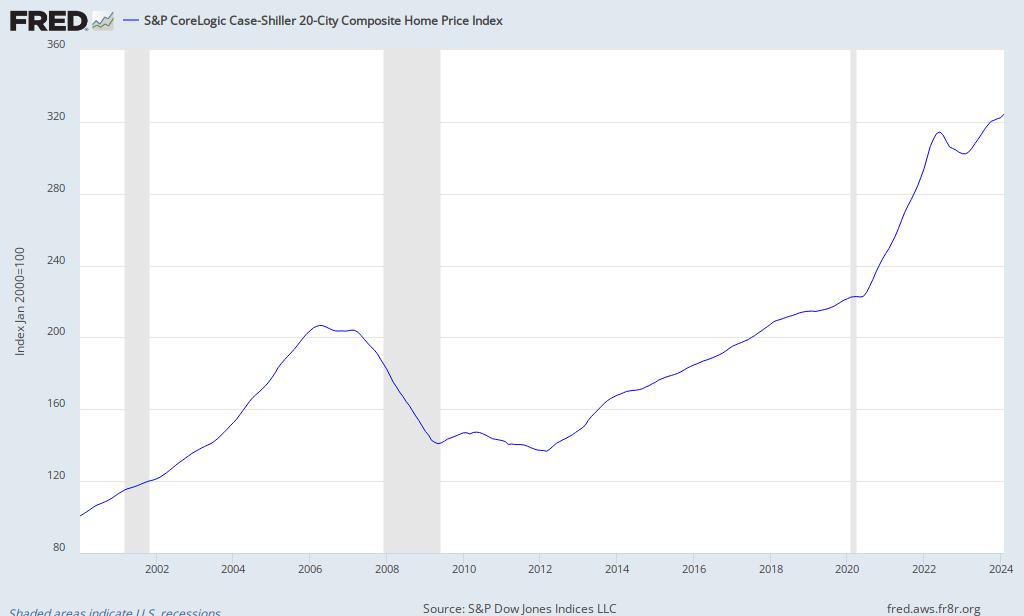
But what does this mean for housing? A report released yesterday by Case-Schiller, a firm that tracks housing prices across the United States, was also unimpressive: most major metropolitan areas continue to see falling home prices. In the Twin Cities metropolitan area, home prices are down roughly 10% compared to a year ago. Now a (pretty strong) case can be made that the housing tax credits last year artificially inflated prices, and they are now "re-setting". The report also indicates that housing prices are now similar to 2002 levels. In other words, nearly 10 years worth of equity has been lost by homeowners.
This string of lackluster economic data has had effects on mortgage rates as well. Rates have gone down over the past week and it's unclear how soon they will rise, if at all.
At the risk of sounding like a broken record, the bottom line is that there has never been a more opportune time to buy. With prices continuing to fall (albeit slowly), rates as low as they have ever been, and an above-average amount of inventory on the market, buyers are in a great position to snatch up deals that, just five years ago, would have seemed laughable. If you are thinking that a transition from renting to owning makes sense (in this market, it does!), please call or e-mail me - I would be happy to assist you in any way possible.
But what does this mean for housing? A report released yesterday by Case-Schiller, a firm that tracks housing prices across the United States, was also unimpressive: most major metropolitan areas continue to see falling home prices. In the Twin Cities metropolitan area, home prices are down roughly 10% compared to a year ago. Now a (pretty strong) case can be made that the housing tax credits last year artificially inflated prices, and they are now "re-setting". The report also indicates that housing prices are now similar to 2002 levels. In other words, nearly 10 years worth of equity has been lost by homeowners.
This string of lackluster economic data has had effects on mortgage rates as well. Rates have gone down over the past week and it's unclear how soon they will rise, if at all.
At the risk of sounding like a broken record, the bottom line is that there has never been a more opportune time to buy. With prices continuing to fall (albeit slowly), rates as low as they have ever been, and an above-average amount of inventory on the market, buyers are in a great position to snatch up deals that, just five years ago, would have seemed laughable. If you are thinking that a transition from renting to owning makes sense (in this market, it does!), please call or e-mail me - I would be happy to assist you in any way possible.
Monday, December 6, 2010
The Sacred Cow of Real Estate
With the nation's finances in dire shape, elected officials will have to make tough choices in the coming years. Federal spending is at its second highest nominal dollar amount (2009 being the highest) in the face of two wars and the "Great Recession," tax revenues have plummeted as a result of massive tax cuts and a sluggish economy, and the gap between the two continues to escalate.
These are the kind of tough choices that make politicians wince. But unfortunately, we've got into this mess and something needs to be done to get out of it.
Numerous deficit-reduction proposals have begun emerging and the Mortgage Interest Tax Deduction, long-held as the "sacred cow" of real estate investing, is increasingly coming under the chopping block. With home ownership a central theme to the American dream, I felt it would be a good idea to investigate these potential changes and how they might affect homeowners.
First, it is important to note that of all the advanced economies in the world, only 4 allow personal debt interest to be deducted from their taxable income. These countries are:
1) The United States
2) Sweden
3) Switzerland
4) The Netherlands
Perhaps homeowners in the United States have taken for granted their ability to write off mortgage interest. As you can see, very few countries have laws that allow such a practice.
There are some important rules that govern that ability of homeowners to write-off mortgage interest. First, mortgage interest deductions are only allowed on primary and second-homes. Investment properties are not often allowed the deduction. Also, only the interest paid on the first $1 million of debt is permitted. These might seem like strict rules, but the reality is that very few Americans own multiple homes, and even fewer have over $1 million in mortgage-related debt.
Currently, the mortgage interest deduction is one of the largest subsidies operated by the federal government. On average, the federal government spends about $100 billion annually to continue the subsidy. But does it that important? Does the mortgage interest deduction really improve the level of homeownership in the United States?
Politically, yes, it does. Defending the mortgage interest deduction has become commonplace for legislators. Can you imagine what the FOX News' and the MSNBC's of the world would have to say about a politician that "supports taking more money away from you"? Of course not, because legislators from both parties have been more than reluctant to call for anything other than a continuation of the status quo.
The real question becomes, who does the mortgage interest deduction benefit most and is it achieving its stated goal of preserving and increasing the level of American homeownership?
Although politicians say one thing, economists (you know, the ones who actually analyze the data and attempt to give unbiased, logic-based conclusions/recommendations!) are almost united in their opposition to the full subsidy. As it turns out the data shows that, although the interest deduction appears to be a good deal for everybody, the winners are those at the very top of the income distribution. And those at the bottom rungs of income? They see the least of the benefits. In fact, in some areas with particularly strong land-use regulations (think urban areas) the mortgage interest deduction actually HURTS homeownership, particularly among lower-income individuals.
So what should be done? It seems both legislatively unfeasible and economically irresponsible to do away with the entire deduction. It has become a way of life for Americans and a major disruption would undoubtedly do more harm than good. I think an effective compromise would be to roll back some of the subsides for the highest-earners (those that need the deduction least) and use the saved revenues to encourage broader home-ownership for lower-income levels. These incentives could be something similar to the $8,000 First Time Home Buyer's tax credit of 2008/2009, or they could be in the form of down-payment assistance. Regardless of the form the incentives take, a well-targeted program would benefit those at the bottom and would start to bring the housing market back to rosier days.

These are the kind of tough choices that make politicians wince. But unfortunately, we've got into this mess and something needs to be done to get out of it.
Numerous deficit-reduction proposals have begun emerging and the Mortgage Interest Tax Deduction, long-held as the "sacred cow" of real estate investing, is increasingly coming under the chopping block. With home ownership a central theme to the American dream, I felt it would be a good idea to investigate these potential changes and how they might affect homeowners.
First, it is important to note that of all the advanced economies in the world, only 4 allow personal debt interest to be deducted from their taxable income. These countries are:
1) The United States
2) Sweden
3) Switzerland
4) The Netherlands
Perhaps homeowners in the United States have taken for granted their ability to write off mortgage interest. As you can see, very few countries have laws that allow such a practice.
There are some important rules that govern that ability of homeowners to write-off mortgage interest. First, mortgage interest deductions are only allowed on primary and second-homes. Investment properties are not often allowed the deduction. Also, only the interest paid on the first $1 million of debt is permitted. These might seem like strict rules, but the reality is that very few Americans own multiple homes, and even fewer have over $1 million in mortgage-related debt.
Currently, the mortgage interest deduction is one of the largest subsidies operated by the federal government. On average, the federal government spends about $100 billion annually to continue the subsidy. But does it that important? Does the mortgage interest deduction really improve the level of homeownership in the United States?
Politically, yes, it does. Defending the mortgage interest deduction has become commonplace for legislators. Can you imagine what the FOX News' and the MSNBC's of the world would have to say about a politician that "supports taking more money away from you"? Of course not, because legislators from both parties have been more than reluctant to call for anything other than a continuation of the status quo.
The real question becomes, who does the mortgage interest deduction benefit most and is it achieving its stated goal of preserving and increasing the level of American homeownership?
Although politicians say one thing, economists (you know, the ones who actually analyze the data and attempt to give unbiased, logic-based conclusions/recommendations!) are almost united in their opposition to the full subsidy. As it turns out the data shows that, although the interest deduction appears to be a good deal for everybody, the winners are those at the very top of the income distribution. And those at the bottom rungs of income? They see the least of the benefits. In fact, in some areas with particularly strong land-use regulations (think urban areas) the mortgage interest deduction actually HURTS homeownership, particularly among lower-income individuals.
So what should be done? It seems both legislatively unfeasible and economically irresponsible to do away with the entire deduction. It has become a way of life for Americans and a major disruption would undoubtedly do more harm than good. I think an effective compromise would be to roll back some of the subsides for the highest-earners (those that need the deduction least) and use the saved revenues to encourage broader home-ownership for lower-income levels. These incentives could be something similar to the $8,000 First Time Home Buyer's tax credit of 2008/2009, or they could be in the form of down-payment assistance. Regardless of the form the incentives take, a well-targeted program would benefit those at the bottom and would start to bring the housing market back to rosier days.
Subscribe to:
Posts (Atom)